
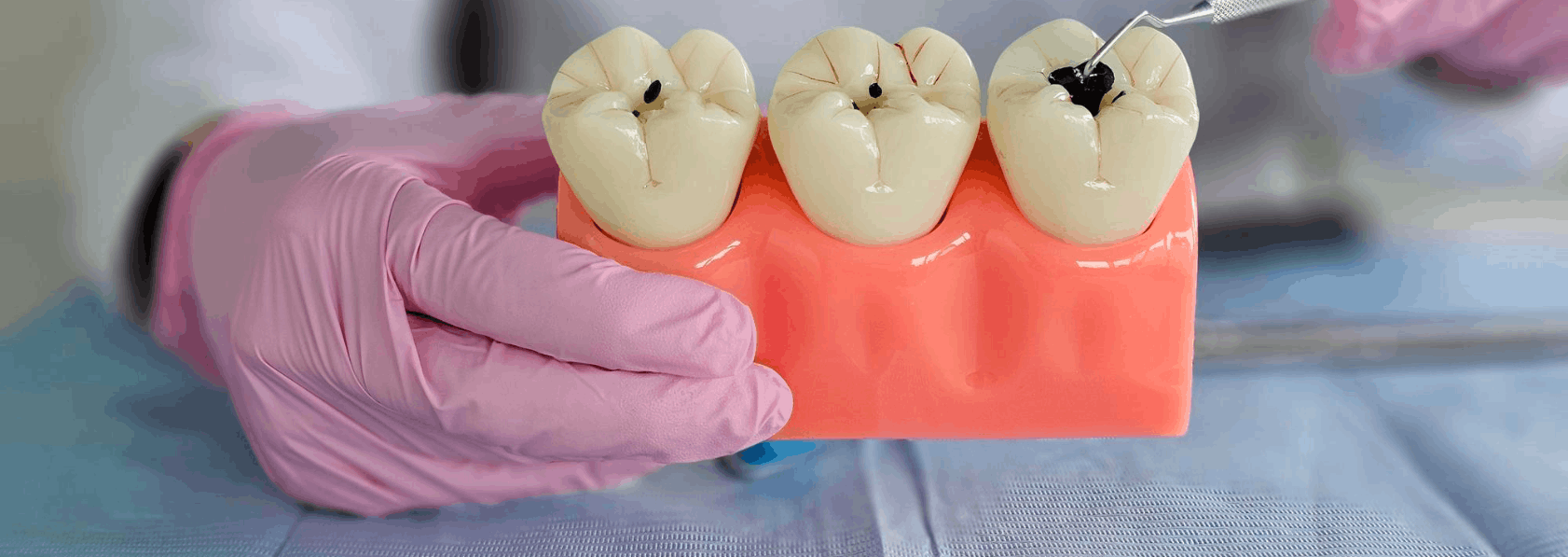
It started as a tiny dark spot on the tooth – something easy to ignore. There was no severe pain, no swelling, and no obvious reason to rush to the dentist. Weeks or months later, that same tooth began hurting while eating, became sensitive to hot and cold foods, and eventually required a root canal treatment. This is a situation many people experience because cavities often progress silently before they become painful.
A cavity doesn’t heal on its own. Once tooth decay begins, it gradually spreads deeper into the tooth if left untreated. What could have been managed with a simple filling may eventually develop into an infection affecting the tooth’s nerve. Understanding how this happens can help you recognize the importance of early dental care and prevent unnecessary discomfort.
A cavity begins when bacteria in the mouth feed on sugars and produce acids that slowly weaken the outer protective layer of the tooth, known as the enamel. During the early stages, the damage is usually painless because enamel contains no nerves.
As plaque continues to build up, the acids create tiny holes in the enamel. These small cavities may not be visible or cause noticeable symptoms, which is why many people delay seeking treatment.
Without proper oral hygiene and regular dental check-ups, the decay continues to progress deeper into the tooth.
Early cavities are often symptom-free because they affect only the enamel.
Pain usually begins when decay reaches deeper layers of the tooth where nerves become irritated. When the pain is starting, that means the cavity has already become larger.
This increase the importance of routine dental examination. Dentists can identify cavities long before they become painful, allowing them to be treated with conservative procedures.
Recognizing the warning signs early can help prevent a small cavity from turning into a dental emergency.
Some common symptoms include:
Sensitivity to hot drinks, cold foods, or sweets that lasts for several seconds may indicate that decay has reached the dentin.
A continuous or throbbing toothache often suggests irritation or infection affecting the pulp.
If biting down causes discomfort, the decay may have weakened the tooth or reached its inner tissues.
Swelling around a particular tooth can be a sign that the infection is spreading beyond the tooth itself.
A tooth that becomes grey, brown, or darker than surrounding teeth may indicate internal damage caused by advanced decay.
If you notice any of these symptoms, seeking prompt evaluation can improve the chances of preserving your natural tooth.
Not every cavity requires a root canal. Dentists carefully examine the tooth before deciding on the most appropriate treatment.
Several factors are considered, including:
If the decay remains confined to the outer layers of the tooth, a filling is usually sufficient. However, when bacteria infect the pulp, root canal treatment is often the most effective way to remove the infection while preserving the tooth.
Many people feel anxious when they hear the words “root canal,” but modern dentistry has made the procedure far more comfortable than its reputation suggests.
During root canal treatment, the dentist carefully removes the infected pulp, cleans and disinfects the root canals, and seals the inside of the tooth to prevent future infection. In many cases, a dental crown is placed afterward to restore the tooth’s strength and function.
Rather than removing the entire tooth, root canal treatment allows patients to continue using their natural tooth for many years with proper care.
Many dental problems develop gradually and may not cause symptoms until they become advanced. Regular dental visits allow your dentist to detect cavities, worn fillings, and early signs of infection before they lead to significant damage.
Professional examinations combined with digital X-rays can identify hidden decay that may not be visible during routine brushing or flossing. Early treatment usually means simpler procedures, lower treatment costs, and a better chance of preserving healthy tooth structure.
Scheduling regular dental appointments is one of the most effective ways to maintain long-term oral health and reduce the likelihood of requiring root canal treatment.
A small cavity may not seem urgent today, but delaying treatment gives bacteria more time to damage the tooth from within. What starts as a simple filling can gradually become an infection requiring more advanced care.
Listening to your body, paying attention to early warning signs, and seeking timely professional advice can help prevent unnecessary discomfort while protecting your natural smile.
If you notice tooth pain after cavity development, prolonged sensitivity, or discomfort while chewing, it’s important not to wait until the pain becomes severe. Consulting the Best Dentist in Pune for a thorough evaluation can help determine the right treatment before the problem progresses further.
At Agarkar Dental Care, every patient receives a detailed examination and a personalized treatment plan based on the condition of their teeth. Whether it’s treating a small cavity or providing advanced root canal treatment, the focus is always on preserving your natural teeth and supporting long-term oral health.