
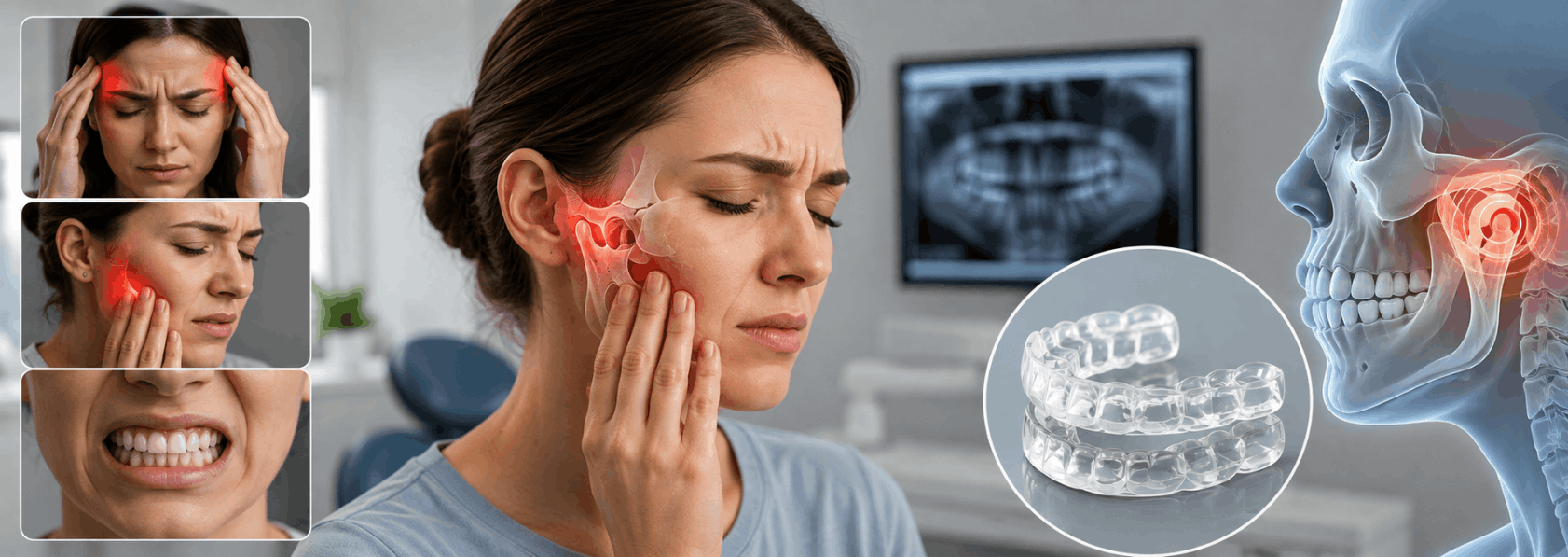
Waking up with jaw pain, frequent headaches, or sore teeth can sometimes be linked to clenching or grinding your teeth. This habit, known as bruxism, may occur during sleep or while you are awake and can gradually place stress on the teeth, jaw muscles, and jaw joints.
Over time, teeth grinding may contribute to tooth wear, sensitivity, jaw stiffness, muscle soreness, and discomfort while chewing. Because the symptoms can develop gradually, many people may not realize that grinding or clenching is contributing to their discomfort.
Occlusal therapy is one approach that may be considered as part of teeth grinding treatment when an assessment identifies bite-related factors contributing to excessive pressure on the teeth and jaw. By evaluating how the upper and lower teeth meet and how the jaw moves, a dentist can determine whether treatment may help improve bite function and protect the teeth.
Occlusal therapy is a dental treatment aimed at improving the way the upper and lower teeth come together during biting and chewing.
When the bite is not functioning properly, certain teeth or areas of the jaw may experience greater pressure. Depending on the individual’s symptoms and clinical findings, treatment may include:
The specific approach depends on the cause of the symptoms, the condition of the teeth individual’s needs, making a personalised assessment an important part of teeth grinding treatment.
Teeth grinding, also called bruxism, can happen during the day or while sleeping. Some people may be unaware that they grind their teeth until a family member notices the sound at night or a dentist identifies signs of tooth wear.
Several factors may be associated with teeth grinding, including:
Persistent grinding can place repeated pressure on the teeth and jaw. If you notice signs of grinding, an early dental assessment can help identify contributing factors and determine whether teeth grinding treatment is appropriate.
Because grinding often happens during sleep, its effects may become noticeable gradually.
Common signs can include:
The first step in teeth grinding treatment is usually a detailed assessment of the teeth, bite, jaw movement, and signs of tooth wear.
Your dentist may examine how the teeth contact each other and whether certain areas are experiencing excessive pressure. Based on these findings, a personalized treatment approach can be recommended.
For some patients, a custom-made occlusal splint may be advised. The appliance is designed according to the individual’s bite and can help protect the teeth from further wear while managing the forces associated with clenching or grinding.
Unlike a generic appliance, a custom-made splint is designed specifically for the patient’s oral structures. However, the appropriate appliance and treatment approach should always be determined after a professional assessment.
Jaw pain can be associated with several factors, including muscle tension, clenching, grinding, and problems affecting the temporomandibular joint (TMJ).
When bite-related factors contribute to excessive strain, occlusal therapy may be considered as part of the treatment plan. Depending on the individual case, improving bite function and managing excessive biting forces may help reduce stress on the jaw muscles and joints.
Patients may notice improvement in symptoms such as:
The response to treatment varies from person to person. A proper assessment is important to determine whether occlusal therapy is suitable for the particular cause of jaw pain.
A mouthguard and an occlusal splint may appear similar, but the appropriate appliance depends on the patient’s condition and treatment needs.
A protective mouthguard may help reduce direct damage to the teeth caused by grinding. An occlusal splint may be recommended when a more individualized approach to bite forces, tooth protection, and jaw function is required.
Depending on the assessment, treatment may involve:
The right approach depends on factors such as tooth wear, bite, jaw movement, symptoms, and overall dental health.
Occlusal therapy is not the same for every patient. A detailed assessment helps identify the factors that may be contributing to the symptoms.
Your dentist may evaluate:
In some cases, crowded or misaligned teeth also need to be addressed. If you are in Pune and require orthodontic correction, an experienced orthodontist in Pune can assess tooth alignment and plan treatment to improve both alignment and bite function.
Jaw pain, headaches, and teeth grinding can sometimes be connected through the way the teeth, jaw muscles, and joints function together. When bite-related factors contribute to excessive pressure or strain, occlusal therapy may form part of a personalized treatment plan.
The right approach depends on the underlying cause, tooth condition, bite, jaw movement, and individual symptoms. If you experience persistent jaw discomfort, frequent headaches, tooth sensitivity, or signs of grinding, a professional assessment can help determine the most appropriate treatment.
Patients looking for dental care in Aundh, Pune can consult the team at Agarkar Dental Care for an evaluation of teeth grinding, jaw discomfort, bite-related concerns, and other dental needs. Teeth grinding treatment is planned based on individual clinical findings and long-term oral health goals.